
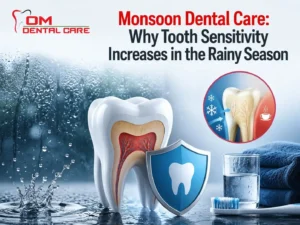
As the monsoon season arrives in Pune and the Wakad area, many patients notice their teeth becoming more sensitive than usual, particularly while drinking warm tea, sipping cold water, or eating during humid, rainy weather. While this seasonal pattern is genuinely common, it is not something patients need to simply accept as an unavoidable part of the monsoon. This guide explains why tooth sensitivity tends to increase during the rainy season, what is actually happening inside the tooth, and how to manage and prevent it effectively.
Why Tooth Sensitivity Often Increases During Monsoon
Tooth sensitivity during the monsoon is generally linked to a combination of factors rather than a single direct cause. Sudden temperature changes, such as moving between humid outdoor air and air-conditioned indoor spaces, or drinking hot tea followed shortly by cold water, can trigger sensitivity in teeth that already have some degree of enamel wear or gum recession. The monsoon season also tends to bring more frequent consumption of hot beverages and comfort foods, which increases the frequency of temperature exposure for many patients.
Additionally, humid weather and seasonal dietary shifts, including more frequent tea, coffee, and fried or sugary comfort foods common during the rains, can contribute to a slightly more acidic oral environment, which can aggravate existing sensitivity in vulnerable teeth.
None of these factors create sensitivity in a perfectly healthy tooth on their own, which is an important distinction, since it means addressing the underlying enamel or gum issue generally resolves the seasonal pattern rather than the sensitivity being an unavoidable monsoon inevitability for everyone.
Understanding What Causes Tooth Sensitivity at a Clinical Level
Tooth sensitivity occurs when the protective enamel layer of a tooth has worn thin, or when the gum has receded enough to expose the underlying dentin, a softer layer of the tooth that contains microscopic channels leading directly to the nerve. When hot, cold, sweet, or acidic substances reach these exposed channels, they can trigger a short, sharp sensation, which is the sensitivity many patients describe feeling more intensely during the monsoon months.
This mechanism explains why sensitivity often feels sharp and brief rather than a dull, lingering ache, since it is a direct nerve response to a specific external stimulus reaching the exposed dentin rather than a sign of ongoing internal inflammation, which would typically present differently.
Common Underlying Causes Behind Monsoon Sensitivity
- Enamel wear from years of brushing technique, acidic food and beverage consumption, or teeth grinding
- Gum recession exposing the more sensitive root surface of the tooth
- Small cracks or chips in a tooth that become more noticeable with temperature changes
- Existing cavities or decay that have not yet caused obvious pain in drier, more stable weather conditions
- Recent dental procedures, such as whitening or a filling, which can leave teeth temporarily more sensitive to temperature
Identifying which of these factors applies to your specific case is the key first step toward genuinely resolving sensitivity, rather than simply managing the discomfort season after season without addressing its root cause.
Why Humidity and Temperature Swings Make a Difference
During the monsoon, daily temperature swings between warm, humid outdoor air and cooler indoor environments are more pronounced than during other seasons, and teeth, much like other parts of the body, can respond to these repeated temperature changes. For a tooth with already compromised enamel or exposed dentin, this repeated thermal cycling throughout the day can make sensitivity feel more persistent and noticeable compared to the relatively more stable temperature exposure of drier months.
Stepping from a warm, humid street directly into a strongly air-conditioned shop or office, a common daily pattern during monsoon, exemplifies exactly this kind of repeated thermal cycling that can keep sensitive teeth feeling persistently uncomfortable throughout the day.
Practical Tips to Manage Sensitivity During the Rainy Season
- Use a desensitising toothpaste formulated to block the microscopic channels in exposed dentin
- Avoid extreme temperature contrasts, such as drinking very hot tea immediately followed by cold water
- Brush gently with a soft-bristled toothbrush, avoiding aggressive scrubbing that can further wear enamel or irritate the gums
- Limit frequent consumption of acidic monsoon snacks and beverages that can aggravate sensitive areas
- Rinse with lukewarm water after consuming very hot or cold items to help neutralise the temperature change gradually
Consistency with these small daily adjustments tends to matter more than any single dramatic change, since sensitivity triggers accumulate throughout the day across multiple small exposures rather than from one specific food or drink alone.
Why Some Patients Notice Sensitivity Only During Monsoon
Many patients are surprised to discover sensitivity that seems to appear specifically during the rainy season, when in fact the underlying enamel wear or gum recession was likely present year-round, simply less noticeable during drier months when temperature exposure is more stable. The monsoon does not create new sensitivity out of nothing, but rather makes existing, often previously unnoticed, vulnerability considerably more apparent through repeated temperature contrast.
The Connection Between Monsoon Diet and Oral Acidity
Seasonal monsoon favourites, including certain fried snacks, tangy chutneys, and citrus-based foods enjoyed during the rains, can temporarily increase oral acidity, which softens enamel slightly and can heighten sensitivity for a period after eating. Rinsing with plain water after these foods, rather than brushing immediately while enamel is temporarily softened, is a simple, practical habit that helps protect enamel during this seasonal dietary pattern.
When Sensitivity Signals a Need for Professional Evaluation
While mild, occasional sensitivity during temperature changes can often be managed with the home strategies above, certain patterns suggest it is time for a dental evaluation rather than continued home management alone. These include sensitivity that is worsening over time, pain that lingers well after the hot or cold stimulus is removed, sensitivity localised to a single specific tooth rather than a general pattern, or any visible damage to the tooth itself.
How a Dentist Diagnoses the Cause of Sensitivity
During a sensitivity evaluation, the dentist examines the affected teeth and gums closely, checks for visible enamel wear, gum recession, cracks, or decay, and may use a diagnostic X-ray if an underlying cavity or other hidden issue is suspected. Identifying the specific underlying cause is important, since the most effective treatment differs depending on whether the sensitivity stems from enamel wear, gum recession, a cavity, or another factor entirely.
This evaluation typically takes only a single visit, and most patients leave with both a clear explanation of what is causing their sensitivity and a concrete plan to address it, rather than continued uncertainty about why their teeth feel the way they do.
Professional Treatment Options for Persistent Sensitivity
- In-clinic desensitising treatments applied directly to the affected tooth surface
- A protective bonding or sealant applied over exposed root surfaces in cases of significant gum recession
- Treatment of any underlying decay identified as a contributing cause
- A custom night guard for patients whose sensitivity is linked to teeth grinding, which often worsens during periods of seasonal stress or disrupted sleep
- Gum treatment where recession itself is significant enough to require a more targeted approach
Preventing Sensitivity Before Next Monsoon Season
Patients who experience sensitivity each monsoon season often benefit from addressing the underlying cause proactively, ideally before the rains return the following year, rather than simply managing symptoms reactively each time the season arrives. A dental checkup before or early in the monsoon season allows the dentist to identify and address contributing factors, such as early enamel wear or gum recession, before seasonal temperature swings make symptoms more noticeable again.
Marking your calendar for a pre-monsoon checkup each year, much like other seasonal preparations many households already make, is a small habit that can meaningfully reduce the discomfort and inconvenience of recurring sensitivity.
How Om Dental Care Helps Manage Seasonal Sensitivity
At Om Dental Care, patients experiencing monsoon-related tooth sensitivity receive a thorough evaluation to identify the specific underlying cause, followed by a personalised treatment plan, whether that involves a simple desensitising approach or addressing a more specific issue such as gum recession or early decay. The team also provides practical, season-specific guidance to help patients manage and reduce sensitivity comfortably throughout the rainy months.
Scheduling a sensitivity evaluation early in the monsoon season, rather than waiting until discomfort becomes significant, generally allows for a quicker, simpler resolution and a more comfortable few months of rainy season tea, coffee, and seasonal favourites.
Frequently Asked Questions
Is it normal for tooth sensitivity to come and go with the seasons?
Yes, many patients notice a seasonal pattern, particularly during monsoon, linked to temperature swings and dietary changes, though persistent or worsening sensitivity should still be evaluated by a dentist.
Can desensitising toothpaste fully resolve monsoon sensitivity on its own?
Desensitising toothpaste can meaningfully reduce mild sensitivity, but it does not address an underlying cause such as a cavity or significant gum recession, which would require professional evaluation and treatment.
Why does my sensitivity feel worse when I drink very hot tea?
Hot beverages can trigger sensitivity directly through exposed dentin channels, and the contrast with cooler ambient or indoor air during monsoon can make this sensation feel more pronounced than during drier seasons.
Should I avoid hot or cold foods entirely if I have sensitive teeth?
Complete avoidance is rarely necessary. Identifying and addressing the underlying cause of sensitivity, combined with sensible moderation around extreme temperature contrasts, is generally more effective than eliminating entire categories of food or drink.
Can children also experience monsoon-related tooth sensitivity?
Yes, children can experience sensitivity related to enamel wear, early decay, or other factors, and any persistent sensitivity in a child’s teeth should be evaluated by a dentist rather than assumed to be purely seasonal.
Does using mouthwash help with monsoon sensitivity?
Certain mouthwashes formulated for sensitivity can offer mild additional relief, though they generally work best alongside, rather than as a replacement

Dr. Sukeshini Ghirware
Om Dental Care, a dental clinic in Wakad, has served families across Shankar Kalat Nagar and Kaspate Wasti since 2008. Dr. Sukeshini Ghiware leads a three-doctor team with over 50 years of combined experience in root canal treatment, dental implants, teeth whitening, orthodontics and kids dentistry. The clinic handles everything from routine checkups and teeth cleaning to full smile makeovers, laser dentistry and gum disease treatment under one roof. Patients from Wakad, Hinjewadi and Bhumkar Chowk visit for painless procedures and same-day emergency dental care. Cashless treatment is available for ICICI Lombard and other insurance plans. Call or book online to schedule your visit.